Side Bets Unleashed: Cracking the Code on Blackjack's High-Stakes Gambles
Olivia Keller · Apr 22, 2026
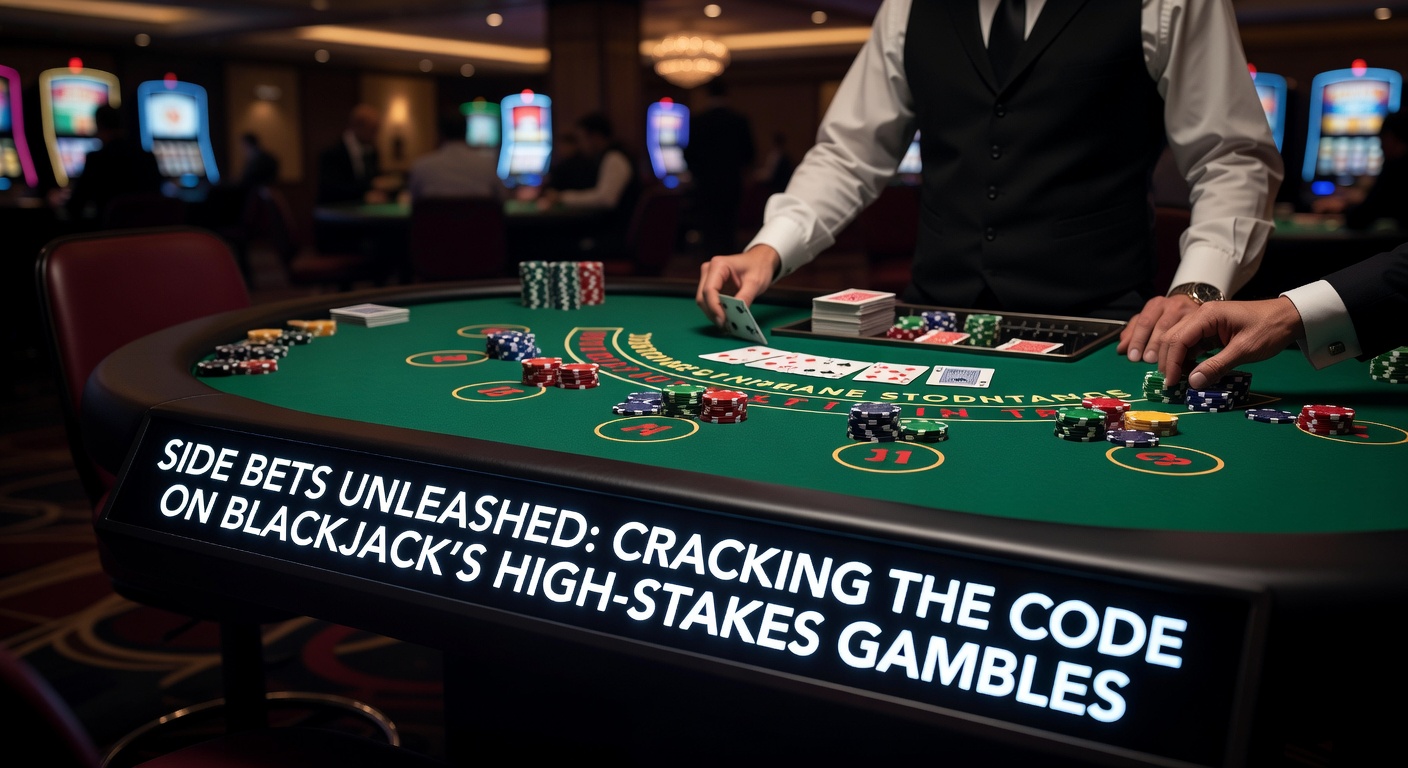
Side Bets Unleashed: Cracking the Code on Blackjack's High-Stakes Gambles
The Rise of Side Bets in Modern Blackjack
Blackjack tables across casinos worldwide buzz with more than just the main game these days; side bets have exploded in popularity, drawing players who chase bigger payouts alongside their standard hands, and data from major gaming floors shows these optional wagers now account for up to 30% of total action at high-volume tables. Casinos introduced them years ago to boost excitement and house revenue, but they've stuck around because players love the thrill of multi-layered decisions during a single deal. Take one busy Las Vegas Strip property where observers noted side bet participation spiking 25% year-over-year, according to Nevada Gaming Control Board reports, which track table game metrics closely.
What's interesting is how these bets layer on top of the core blackjack rules without changing the primary play; players simply place chips in designated spots before the deal, and payouts trigger based on specific card combinations involving their hand, the dealer's upcard, or both. And while the main bet's house edge hovers around 0.5% with perfect basic strategy, side bets carry steeper edges, often 2% to 13%, making them high-volatility gambles that pay off big or bust fast.
Breaking Down the Most Common Side Bets
Perfect Pairs tops the list as the simplest and most widespread side bet, where players win if their initial two cards match in rank and suit (mixed or same color pays less), with odds landing at 1 in 7.5 for a mixed pair but soaring to 1 in 52 for the perfect suited version; casinos typically pay 11:1 on mixed, 25:1 or better on colored, and 30:1 up to 100:1 on suited, though house edges range from 4.5% to over 10% depending on the paytable. Players who've tracked sessions often find it tempting because it resolves immediately after the deal, adding instant gratification to the mix.
Then there's 21+3, which borrows from Texas Hold'em poker by using the player's two cards plus the dealer's upcard to form a three-card poker hand like flush, straight, or three-of-a-kind; payouts escalate dramatically—5:1 for three-of-a-kind, up to 100:1 for suited trips—and research indicates house edges between 3.2% and 6.7%, with the best versions found in European casinos where stricter paytable standards apply. But here's the thing: even small tweaks in payout structure swing the edge wildly, so savvy players always check the table plaque first.
Lucky Ladies (or Queen of Hearts) takes it further by rewarding specific blackjack hands, especially those with pairs of queens; a suited queen-queen with a king upcard might pay 200:1 or 500:1, while basic Q-Q pays 30:1, and data from mathematical analyses by experts like Michael Shackleford reveals house edges from 2.8% on premium tables to a hefty 12% elsewhere. Observers note its appeal lies in chasing those rare monster hands that turn modest wagers into life-changing sums overnight.
House Edges and RTP: The Numbers Players Need to Know
Figures reveal the raw truth about side bets' profitability for casinos; across 20 popular variants, average house edges hit 5.5%, more than ten times the main game's edge, yet that hasn't deterred adoption since players willingly trade edge for volatility, with RTPs dipping as low as 87% on poor paytables but climbing to 97% on optimized ones. And in high-limit rooms, where minimums start at $25 per side bet, the math scales up fast—one study of Australian casino data showed side bets generating 40% of blackjack revenue despite comprising just 15% of wagers.
Red 7s stands out for its simplicity, paying on red sevens in the player's first three cards (with multipliers for consecutive ones or dealer upcard matches), offering house edges around 5.8% to 11.5%; players spot it easily by the escalating pyramid payout structure, which rewards three straight flushes at 1,000:1 or more. Suited Trips, meanwhile, hunts three suited cards of the same rank anywhere in the hand, with edges from 3% to 8%, and it's gained traction online where software tracks combos precisely.
Now, as April 2026 approaches, regulatory shifts in places like Ontario, Canada, promise tighter oversight on side bet paytables to protect players, with the Ontario Lottery and Gaming Corporation mandating minimum RTP disclosures—moves that could standardize edges and make cracking these bets' code even more straightforward for informed players.
Strategies That Tilt the Odds Slightly
Experts emphasize that no strategy beats the house edge long-term on side bets since they're independent of player decisions post-deal, but choosing tables with top paytables shaves points off the edge; for instance, Perfect Pairs with 43:1 on suited pairs drops to 2.1% house advantage, a fact confirmed through simulations running millions of hands. Those who've studied variance point out high-payout bets like Royal Match—paying 100:1 for suited king-queen of spades—pack massive swings, where a cold streak wipes banksrolls but hot runs deliver 20x returns in hours.
Take one case from a Macau high-roller pit where a player hit a 1,000:1 Dragon 7 side bet (three sevens with dealer showing seven), turning $100 into $100,000; such stories fuel the fire, although data shows these events occur once every 12,000 hands on average. And blending side bets with main-game card counting proves tricky since most side bets reset per hand, though some pros exploit dealer upcard correlations in 21+3 for micro-edges under perfect conditions.
Yet the rubber meets the road in bankroll management; observers who've crunched numbers recommend wagering no more than 5% of session buy-in on sides to weather volatility, since standard deviations exceed 10x the bet size on many variants.
Global Availability and Evolving Casino Landscapes
Side bets thrive unevenly around the world; U.S. land-based casinos offer the widest array with over 50 variants at places like Atlantic City and Vegas, while online platforms in regulated markets like New Jersey and Pennsylvania mirror them digitally, complete with provably fair RNGs audited quarterly. In Europe, versions stick to fewer bets but higher minimum RTPs, and Asia's baccarat-heavy floors increasingly add blackjack sides to compete.
Online growth has been explosive, with live-dealer streams featuring side bets boosting retention by 35%, per industry analytics; players access them 24/7, often with bonuses covering side wagers. But regulations loom large—as California's cardrooms brace for 2026 blackjack tweaks elsewhere, side bets remain a flexible revenue stream, untouched by many core rule changes.
There's this trend too where crypto casinos experiment with provable side bet odds, letting players verify edges blockchain-style, a nod to transparency demands from younger demographics.
Conclusion
Side bets inject high-stakes adrenaline into blackjack without overcomplicating the game, offering payouts that eclipse main bet wins while carrying edges players can minimize through table selection and discipline; data underscores their dual role as casino profit drivers and player thrill machines, with optimal versions delivering fair fights against the house. As 2026 regulations refine disclosures and standards, especially in North American markets, those who master paytables and variance stand best positioned to unleash their potential. Ultimately, cracking the code boils down to knowing when the thrill aligns with the numbers, turning casual wagers into calculated gambles.