Shoe Depletion and Strategy Shifts: Tracking Changes in Prolonged Blackjack Play
Olivia Keller · May 23, 2026

Shoe Depletion and Strategy Shifts: Tracking Changes in Prolonged Blackjack Play
Shoe depletion occurs as cards are removed from the dealing shoe over the course of many hands, and this process alters the composition of the remaining deck in measurable ways that affect optimal play decisions. Observers note that players who continue sessions for dozens of rounds encounter shifting probabilities, and these changes prompt some to adjust their actions away from standard basic strategy charts. Research from gaming laboratories shows that the rate of depletion depends on the number of decks in play, typically ranging from six to eight in most commercial settings, along with the penetration level reached before the shoe is reshuffled.
Mechanics of Card Removal and Remaining Composition
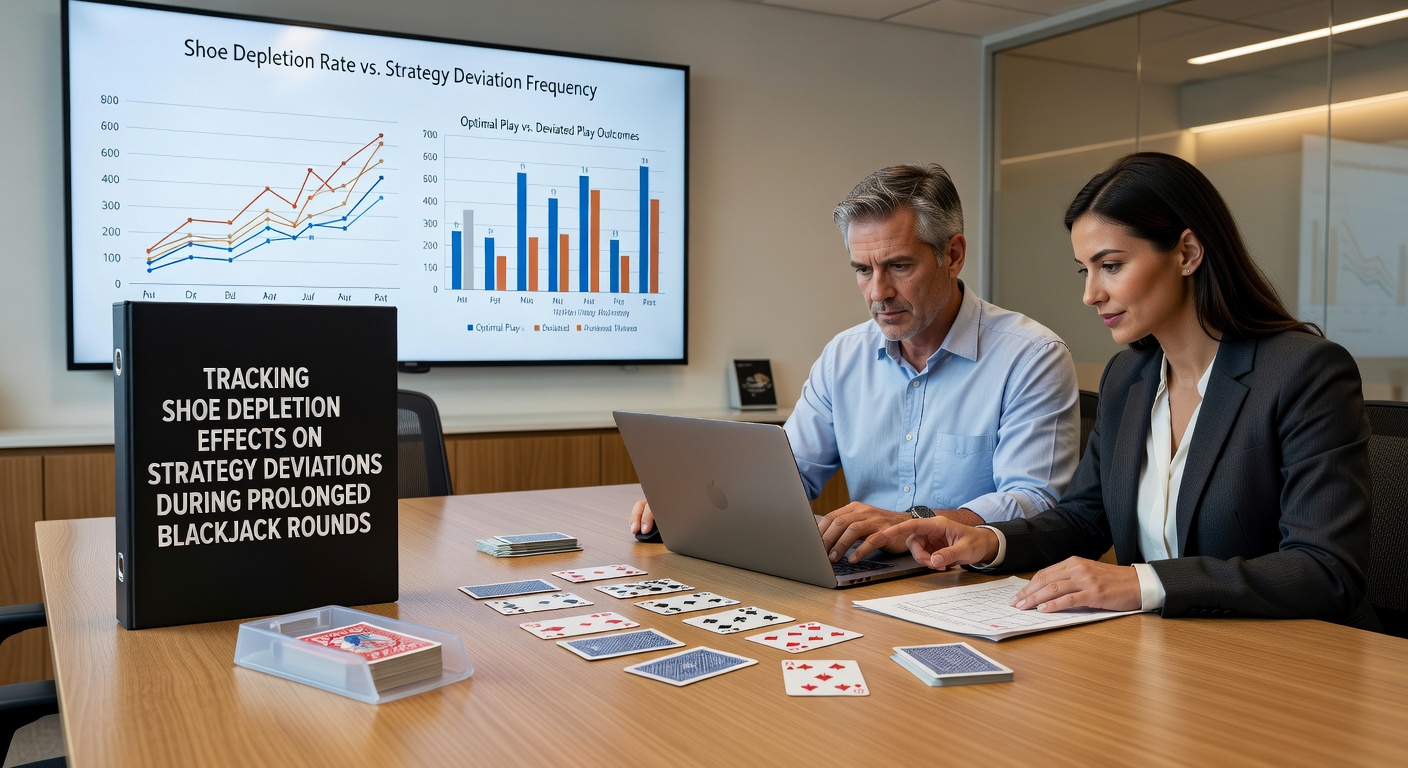
Each card dealt reduces the total count of that rank in the shoe, which modifies the likelihood of future draws for players and the dealer alike. When low cards leave the shoe first, the proportion of high cards rises, and this shift influences whether hitting or standing becomes the higher expected value choice in borderline situations. Data collected from casino floor systems indicates that deviations from basic strategy increase by measurable percentages once penetration exceeds 60 percent of the shoe, particularly on hands involving soft totals or pairs.
Players who track these changes often rely on mental counts or electronic aids where permitted, and studies from university mathematics departments confirm that such monitoring allows for index-based adjustments that deviate from fixed charts. These adjustments appear most frequently on decisions like whether to double down on ten against a dealer’s six once the shoe has been significantly thinned.
Observed Player Behavior Across Extended Sessions
Long sessions reveal patterns where participants begin to second-guess standard recommendations after the shoe has been in continuous use for thirty or more hands. Video analysis from surveillance archives demonstrates that hesitation before decisions rises noticeably in later rounds, and some players alter their hit-or-stand choices on stiff totals when they perceive a higher density of remaining tens. Figures from multi-property operators show these deviations cluster around hands with totals of fifteen or sixteen against dealer upcards of seven through ten.
What's interesting is how the physical handling of the shoe itself contributes to these shifts, since dealers typically place cut cards at varying depths, and the remaining stub size directly determines when reshuffling occurs. In venues using continuous shuffle machines the effect disappears entirely, yet most traditional tables still rely on manual penetration, which creates the window for depletion to matter.
Regional Data and Regulatory Context
Reports compiled by the Nevada Gaming Control Board document average session lengths and corresponding decision logs across dozens of properties, revealing that deviations cluster in the final third of shoe usage. Similar patterns appear in records maintained by the Australian Gambling Research Centre, where analysts compared play data from six-deck and eight-deck games and found consistent movement away from charted strategy once the remaining card ratio fell below a certain threshold.
Those who've examined session tapes note that the timing of these changes often coincides with visible fatigue markers, yet the mathematical component remains measurable even when controlling for player tiredness. In May 2026 several properties introduced updated training modules for dealers that include reminders about maintaining consistent penetration depths, a response to internal audits showing wider variation in shoe usage than previously recorded.
Measurement Techniques and Tracking Tools
Modern floor management systems now log every decision alongside the running count of cards removed, allowing operators to correlate specific deviations with exact depletion levels. Academic researchers who obtained anonymized datasets have published models that predict the probability of a given strategy departure once the shoe reaches 75 percent penetration. These models rely on combinatorial analysis rather than simulation alone, and they account for the exact remaining ranks rather than broad high-low approximations.
Equipment manufacturers have responded by offering optional display units that show remaining deck composition percentages without revealing individual cards, and several jurisdictions require these displays to remain visible only to staff. The approach keeps the information flow controlled while still permitting internal review of whether player adjustments align with actual remaining composition.
Conclusion
Shoe depletion produces verifiable changes in the probabilities that underpin blackjack decisions, and prolonged rounds create repeated opportunities for players to move away from static strategy guidelines. Records maintained by regulatory bodies and academic analyses continue to map these movements with increasing precision, providing operators and researchers with clearer pictures of how card removal influences real-time choices at the table. As monitoring tools improve, the relationship between depletion stage and deviation frequency becomes easier to quantify across different game configurations and session lengths.