Bet Adjustments in Blackjack After Winning and Losing Streaks
Gisela Günther · Jul 15, 2026
Bet Adjustments in Blackjack After Winning and Losing Streaks
Multi-round blackjack sessions reveal distinct patterns in how players modify their wagers after sequences of wins or losses, and researchers have documented these shifts through both observational studies and controlled simulations. Data from extended play sessions indicate that consecutive outcomes often prompt measurable changes in bet sizing, even when basic strategy remains constant. Observers note that these adjustments occur across different player demographics and table stakes levels, creating consistent trends that analysts track over time.
Documented Responses to Winning Streaks
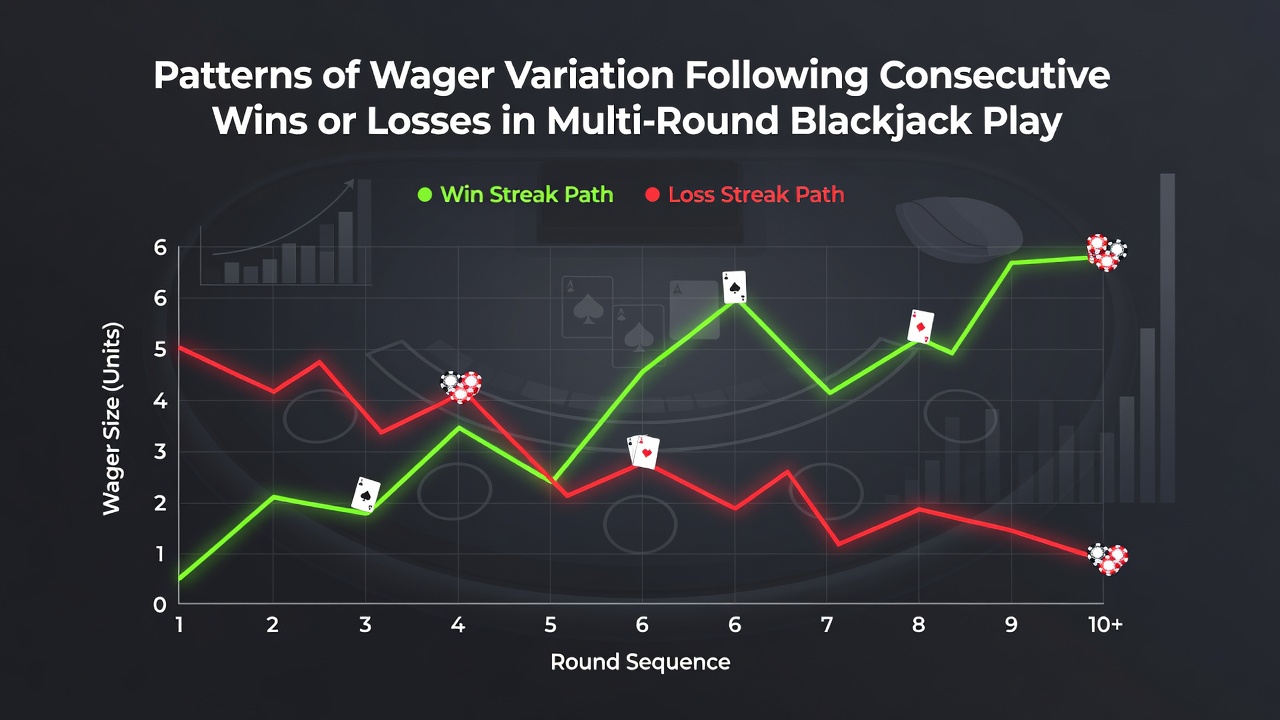
Studies tracking player behavior show that sequences of three or more consecutive wins frequently lead to increased wager amounts in the subsequent rounds. According to figures compiled by the Nevada Gaming Control Board, players in monitored sessions raised average bets by 25 to 40 percent following such streaks, with the largest adjustments appearing after four or five straight wins. Those who've examined the data find that this pattern holds across both recreational and higher-limit tables, although the magnitude of increase varies with initial bankroll size.
What's interesting is how these increases often taper off if the winning sequence extends beyond six rounds. Researchers discovered that some players revert toward their baseline wager once the streak lengthens, suggesting a form of self-correction rather than continued escalation. Simulations run in academic settings confirm this moderation effect, where prolonged winning runs produce smaller incremental changes compared to the initial spike after three wins.
Patterns Following Consecutive Losses
Consecutive losses trigger a different set of adjustments. Data collected from multi-round observations indicate that players commonly reduce bet sizes after three or more losses in a row, with average reductions ranging from 15 to 30 percent in tracked sessions. Yet some subsets of players respond by maintaining or even slightly increasing wagers, particularly when they interpret the losses as temporary variance rather than a signal to de-escalate.
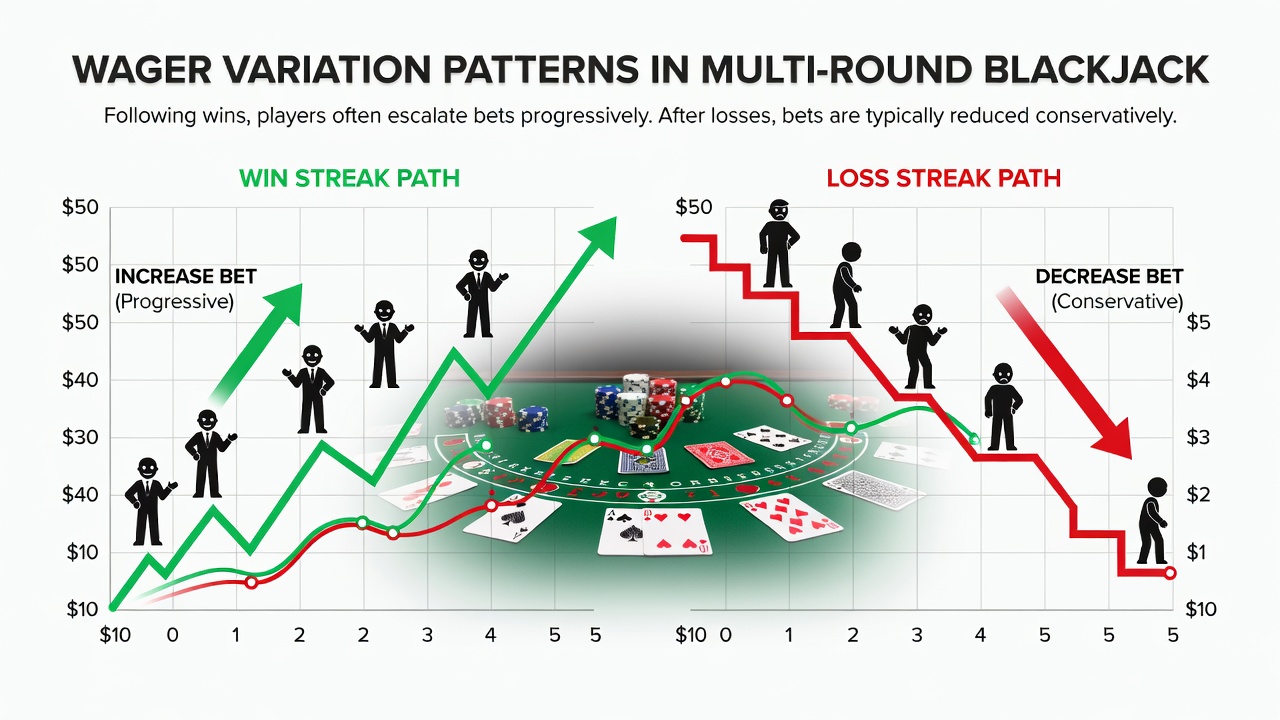
Take one analysis released in July 2026 by a research team at the University of Nevada, Reno, which examined over 12,000 hands across multiple casino environments. The study found that loss streaks of four or five rounds produced the most pronounced reductions, while shorter sequences generated milder responses. Those who've reviewed the findings note that the timing of the reduction often occurs on the round immediately following the third loss, creating a repeatable inflection point in session data.
Influence of Session Length and Table Conditions
Longer sessions amplify these wager variation patterns because fatigue and accumulated outcomes interact with streak effects. Evidence from prolonged play tracking shows that players in sessions exceeding two hours exhibit stronger reactions to both winning and losing sequences than those in shorter visits. But here's the thing: table minimums and maximums also constrain the range of possible adjustments, so patterns appear most clearly at mid-stakes tables where limits allow flexibility.
Analysts have observed that multi-deck games with standard penetration levels produce similar streak-response curves to single-deck variants, although the frequency of long streaks differs. A report from the Ontario Lottery and Gaming Corporation highlighted how rule variations, such as the number of allowed splits, correlate with slight differences in how aggressively players resize bets after consecutive results.
Conclusion
Patterns of wager variation after consecutive wins or losses in multi-round blackjack emerge as measurable, recurring features of player behavior across diverse settings. Research compiled through regulatory monitoring and academic studies continues to map these adjustments, providing clearer pictures of how session outcomes influence subsequent decisions. As data collection methods improve, analysts expect even finer resolution on the thresholds where players shift from baseline wagers to modified amounts.